


In short:
Amsterdam/Berlin, 4 November - To meet strong and growing customer demand for energy flexibility in Germany, Return is expanding the battery storage capacity underpinning its Virtual Flexibility Portfolio (VFP). To support this expansion, Return has secured an €835 million portfolio financing underwritten by Deutsche Bank and Rabobank. The financing will strengthen Return's ability to provide multiple customers with scalable access to the flexibility they need to manage their electricity portfolios and integrate growing volumes of renewable energy.
Return aims to install at least 1 GW of battery storage capacity annually in Germany from 2027 onwards, representing planned annual investments of between €750 million and €1.2 billion, subject to market conditions. The expansion will strengthen Return's ability to deliver flexible energy capacity to a growing customer base in one of its most important European markets.
As Germany's electricity system increasingly relies on wind and solar power, energy companies need greater flexibility to manage fluctuations in supply and demand. Return addresses this need through its Virtual Flexibility Portfolio, which combines capacity from multiple battery storage assets into one virtual portfolio. This gives customers access to flexible capacity through a single interface, allowing them to manage their energy portfolios more effectively and scale their access to flexibility as their needs grow.
Commercial partnerships
ENGIE recently expanded its German partnership with Return to 400 MW of contracted battery flexibility, while Centrica Energy signed a separate 100 MW agreement. Return also works with energy companies such as Vattenfall, Essent, and Eneco in other European markets, reflecting broader demand for its flexibility services.
"As demand for energy flexibility grows, we need to scale not just our battery storage capacity, but also the way we finance it. By bringing together physical infrastructure financing and our virtual flexibility model, we can expand more efficiently and respond to our customers' evolving needs. This is an important step towards our ambition to become a leading independent provider of energy flexibility in Germany," said Daniel Witvoet, CFO at Return.
A financing model built for growth
Large-scale battery storage facilities are traditionally financed individually, requiring separate financing processes for each development. Return's portfolio framework brings multiple facilities under one financing structure, enabling eligible projects to access capital without restarting the process for each location.
This provides a more efficient and repeatable route to financing, allowing Return to expand its online battery storage capacity to meet growing customer demand for energy flexibility. Return previously applied a similar approach in the Netherlands, where its Sirius project reached financial close earlier this year under a framework covering multiple battery storage projects. The German financing takes this model a step further by combining portfolio financing for physical battery assets with Return's virtual flexibility model.
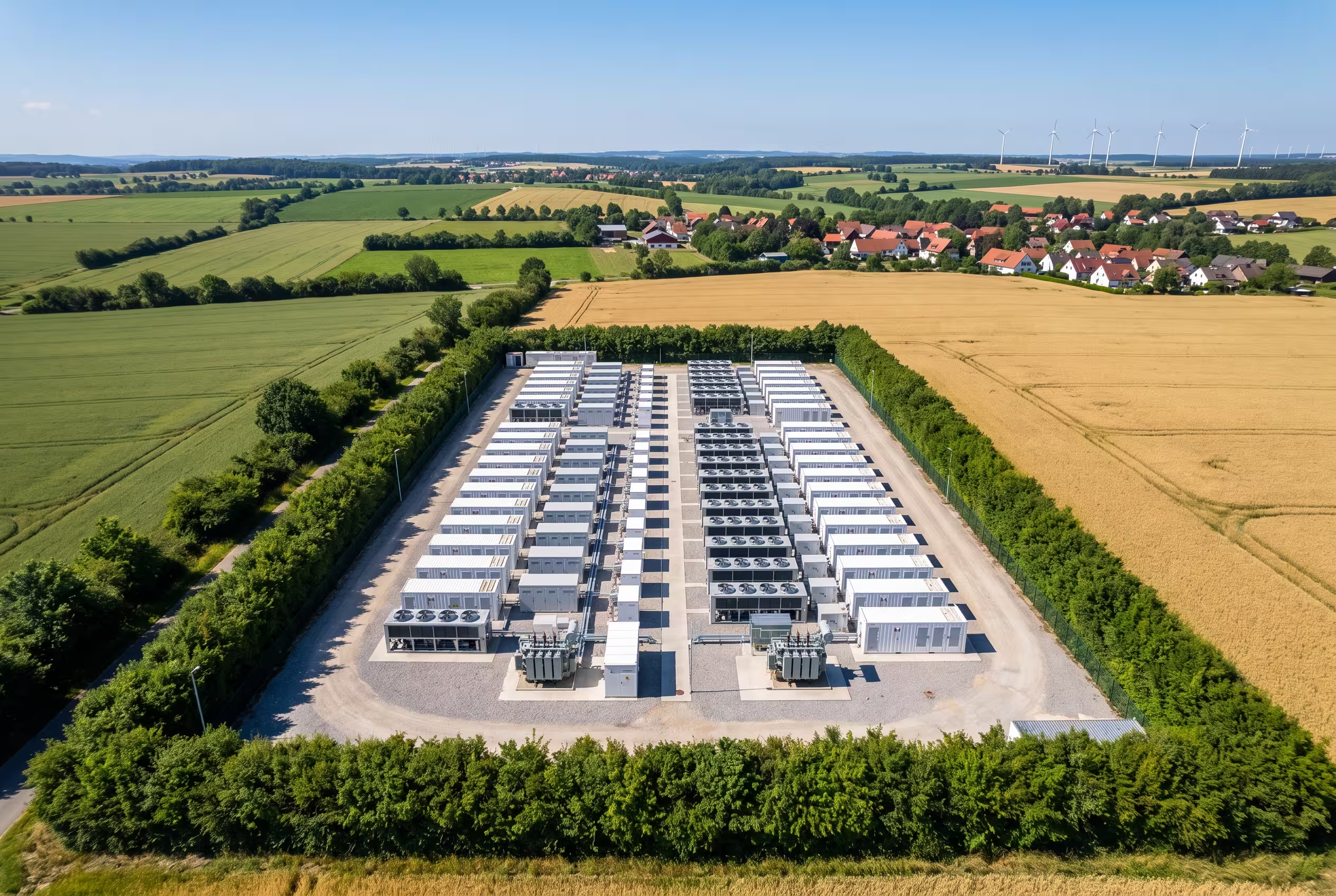
Three battery storage projects in Germany, representing a combined capacity of 117 MW, are covered by the new financing framework. Assuming four-hour batteries operating at two full cycles per day, the facilities could discharge enough electricity annually to match the yearly consumption of approximately 100,000 German households.* Additional eligible projects can be financed under the same framework as they progress towards financial close.
Dominik Thumfart, Head of Infrastructure & Energy Origination, Deutsche Bank: "Battery storage plays a crucial role in Germany's energy transition, by assisting with optimizing the revenue potential of intermittent power generation plants and ensuring grid stability. We are pleased to support Return with a financing structure built to scale and structured to meet the capital expenditure needs of Return’s German BESS project pipeline”
Marc Schmitz, Head of Project Finance Europe at Rabobank, said: “Germany needs more flexible capacity as wind and solar generation grows. This facility helps direct investment into large-scale battery storage. Supporting technologies that enable the further growth of renewable energy is a key part of Rabobank’s approach to the German energy transition. We are delighted to further strengthen our relationship with Return and support its expansion into Germany. Building on our previous transactions together, we are combining our advisory, underwriting, project finance and hedging expertise to help Return realise its growth ambitions.”
Rabobank acted as financial advisor, with Hogan Lovells Cadwalader advising the borrowers and White & Case acting as lenders' legal advisor. Baker McKenzie provided project due diligence, while Baringa served as commercial advisor, DNV as technical advisor, EY and EY Parthenon on tax structuring and financial and tax modelling and Marsh on insurance.
Supporting Germany's growing need for energy flexibility
As Germany integrates growing volumes of renewable energy, investment in flexible capacity will be essential to maintaining a resilient electricity system. Return's expansion will help energy companies manage increasingly variable power generation and support the country's energy transition.

