Laichingen is already an established energy location and an important supra-regional hub in the German power grid: a substation, high-voltage and extra-high-voltage lines, and the Suppingen solar park are all located close together here. The battery storage facility complements this existing infrastructure. The storage units will be connected directly to the existing power grid. This keeps connection routes short and avoids the need to build additional power lines beyond the immediate storage site. Seen from Suppingen, the storage facility sits behind the substation and the solar park, deliberately set back from the village. The site is the result of a selection process run by the town of Laichingen using municipal land pooling, in which Return was chosen as project developer in April 2026.
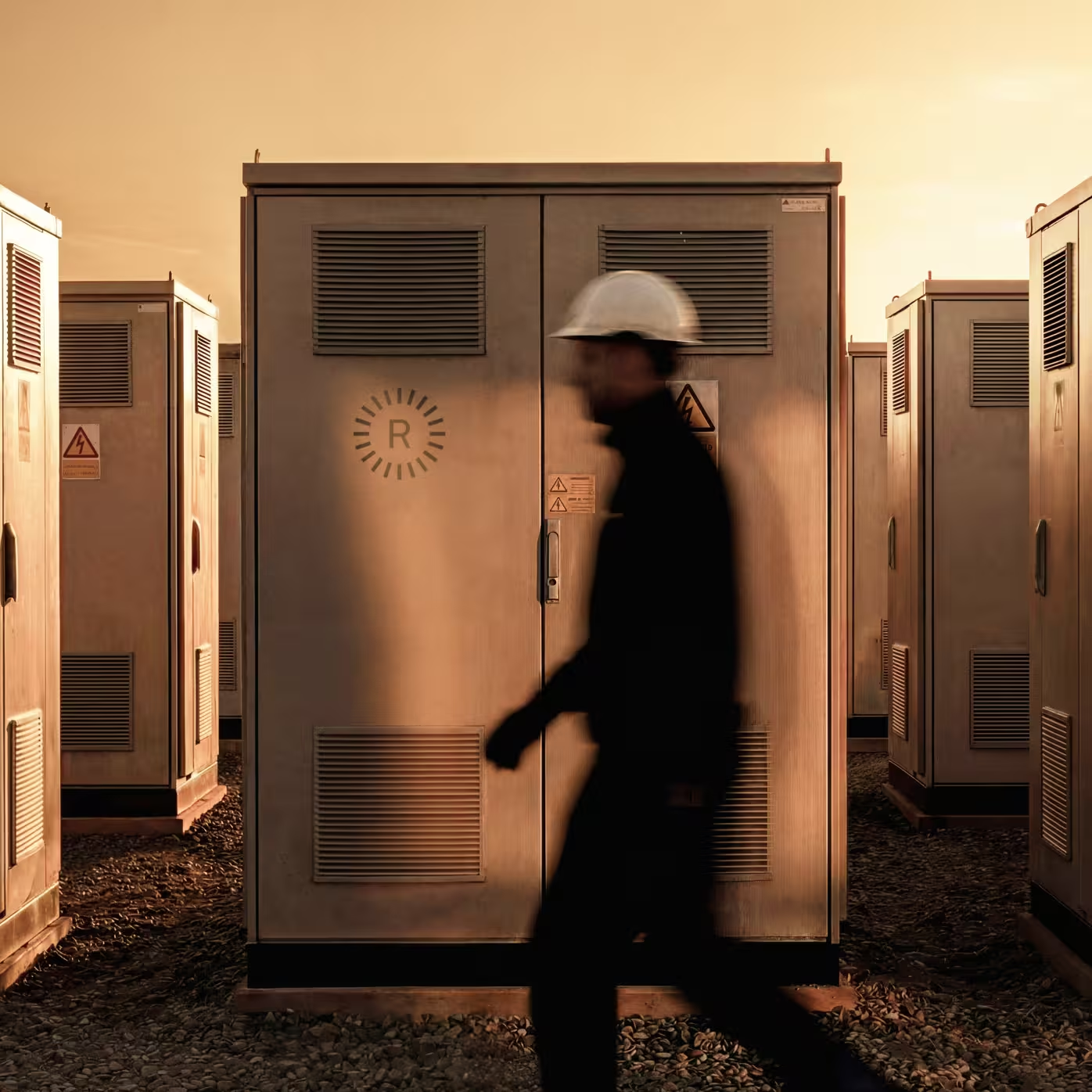
Return is planning a containerised battery energy storage system (BESS) using lithium iron phosphate batteries. Battery storage facilities like the one in Suppingen play an important role in stabilising the power grid, because electricity is often generated at times when it isn't needed. The storage system shifts energy to when it is needed and fills the gaps.
The project will be built in two phases, connected at different levels of the power grid. The storage system is complemented by the technical equipment needed for the grid connection: each battery container houses battery modules, a battery management system and its own cooling system. Inverters convert the batteries' direct current into grid-compatible alternating current, and transformers adjust the voltage to match the grid. The facility is monitored around the clock by control and monitoring systems (see the "Safety & Environmental Protection" section for more details).



A battery storage facility brings a wide range of benefits.

Our battery storage facility should benefit not only the energy transition and the power grid, but also the people who live here.
All residents of Laichingen will have the opportunity to invest in the project themselves and earn an attractive rate of return. This keeps part of the value created in the region and allows residents to share directly in the project's development.
Return will announce details of the community investment scheme and its specific terms no later than the start of operations in 2028.

Safety and environmental compatibility are top priorities in the operation of the battery storage facility.
Safety: The facility is monitored 24/7. A fence prevents unauthorised access. Lithium iron phosphate cells are the standard for large-scale storage systems, and this cell chemistry is particularly stable.
In the very unlikely event of a fire, an automatic aerosol fire suppression system smothers the flames.
Environment/Health: The battery storage facility helps integrate variable generation from wind and solar power. A hedge will blend the facility into the surrounding landscape. Once operations end, the facility must be fully dismantled.
The facility produces no exhaust gases, dust or odours during operation. According to the noise assessment, noise from the storage facility at the nearest homes remains at least 6 dB below the legal limits, both day and night. The nearest homes in Suppingen are around 570 metres away.

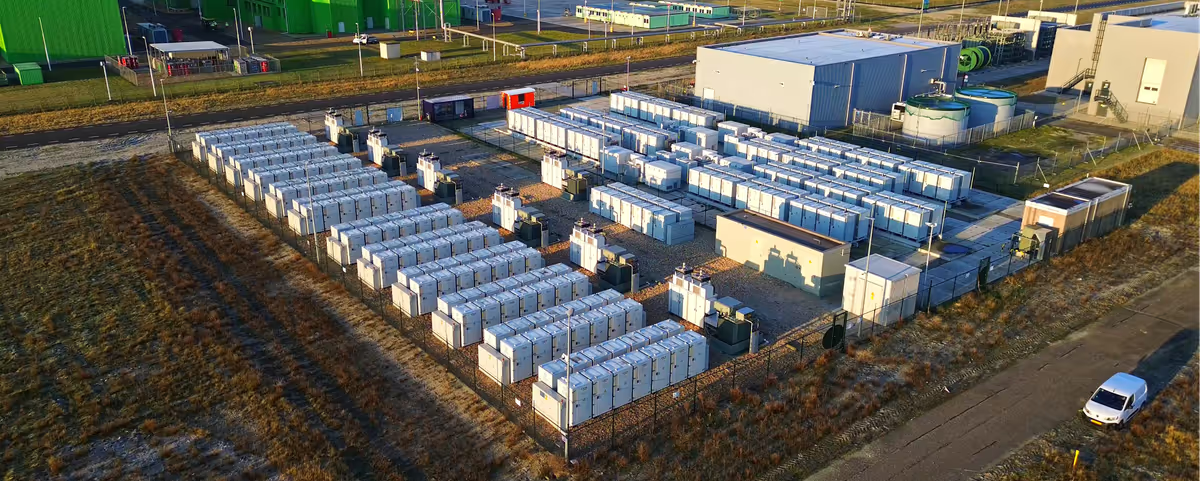
Return develops and operates battery storage systems – making a tangible contribution to the energy transition. We are one of Europe's leading independent providers of energy storage solutions.
Our goal is clear: to make renewable energy more usable while strengthening security of supply – especially for the people who live here.
We bring extensive experience in project development and delivery. This experience helps us not only with technical matters, but above all in working responsibly with regions and the people who live there. It is important to us to work together with local people to develop a project that is delivered safely, transparently and sustainably.
After all, energy projects are a matter of trust. That's why we are committed to open dialogue, clear information and dedicated contacts who are always available to answer questions.